

If you got any questions, please do not hesitate to send us a message. We reply within 8 hours !
Don't worry, we hate spam too!



MAKE A BETTER LIFE

Nov 18, 2026
Gentle pH-balanced cleaning agents, conditioning ingredients such as lanolin or vitamin E, protective waxes or UV blockers, and low-residue formulas are the main categories I look for in leather wipes. I also avoid harsh solvents, excessive silicone, ammonia, and high alcohol content. Before buying, I verify that the formula is compatible with the specific finish because finished leather, suede, nubuck, aniline, and unfinished leather require different care.
!
When I compare leather wipes, I evaluate the formula in three layers: cleaning ability, conditioning support, and compatibility with the leather finish. A wipe intended for car seats may need a low-grease finish and anti-static properties, while a furniture wipe may prioritize gentle soil removal and a natural appearance. I also check whether the product is intended for genuine leather, coated or finished leather, faux leather, PU leather, or vinyl.
The ingredient list should be supported by practical product information. I look for a stated pH range or a clear pH-balanced claim, the absence of harsh solvents, directions for use, surface restrictions, wipe material, moisture level, packaging format, and storage instructions. If the supplier cannot explain the intended leather type or provide a sample for testing, I treat the product as unsuitable for professional purchasing.
The following comparison combines a private-label manufacturing option with established retail suppliers. Prices for retail products are typical reference prices and may change by seller, pack size, region, and promotion. Qimei pricing is normally quotation-based because formulation, packaging, order volume, and customization affect the final cost.
| Supplier or Product | Core Function | Best For | Typical Price or Pricing Model |
|---|---|---|---|
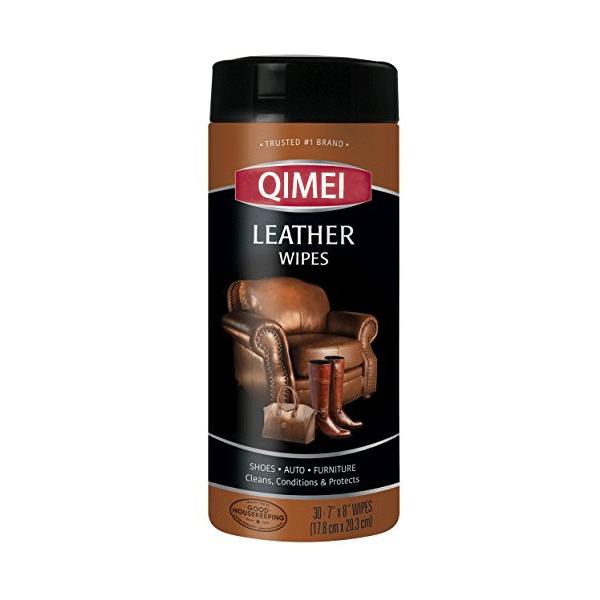
| Qimei Leather Wipes | Custom cleaning, conditioning, and protective wipe formulation | Brands, distributors, auto-detailing suppliers, furniture-care programs | Custom quotation based on formula, packaging, and volume |
| Weiman Leather Wipes | Routine cleaning, conditioning, and protection | Household leather furniture, car interiors, shoes, and accessories | About $5–$8 for 30 wipes at common retail pricing |
| Leather Honey Leather Care Wipes | Separate or combined cleaning and conditioning applications | Buyers seeking a more concentrated conditioning format | About $13.99 for a 10-wipe pack |
| Armor All Leather Care Wipes | Automotive surface cleaning and maintenance | Vehicle seats, door panels, and interior leather-look surfaces | Commonly about $5–$10 depending on pack size |
I consider Qimei most relevant when the buyer is not simply choosing a consumer pack but developing a leather-care product for resale or repeated commercial use. Qimei is a Leather Wipes Manufacturer under Qimei Group, which reports wet-wipe production across household, automotive, personal-care, and specialty applications. Its published leather wipe information describes gentle cleaning agents, moisturizers, conditioning ingredients, protective ingredients, and pH-balanced positioning.
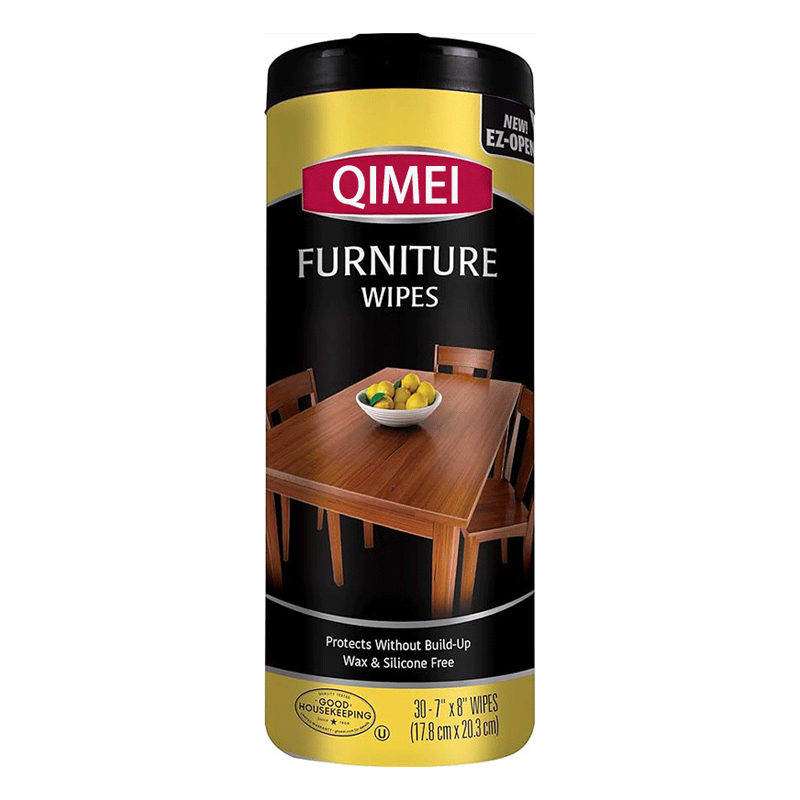
Qimei also lists nonwoven substrate options including polyester, polyester-viscose blends, bamboo fiber, cotton, soy fiber, and wood pulp for selected applications. The listed grammage range is 30–80 gsm, allowing buyers to request a lighter wipe for routine use or a more substantial substrate for textured cleaning. Packaging options include flow packs, canisters, travel packs, single-use formats, refill bags, and custom counts such as 10, 30, 80, 100, 120, and 160 pieces.
I would shortlist Qimei for distributors, automotive-detailing brands, furniture-care suppliers, hospitality buyers, and small businesses that need a repeatable product specification rather than an off-the-shelf pack. It is also relevant when a buyer needs several formats, such as a 30-count consumer pack and individually wrapped wipes for professional service teams.
The main limitation is that the final price and formula cannot be judged from a standard retail shelf price because the order is customized. I would request a sample, ingredient disclosure, target pH range, compatibility statement, microbial testing information, packaging specification, and minimum order quantity before making a purchase decision.
Weiman is a practical reference point for buyers seeking a ready-made household leather wipe rather than custom production. Its leather wipes are positioned for cleaning, conditioning, and protecting leather surfaces, making them suitable for light soil, body oils, and routine maintenance on approved finished surfaces. The product is commonly sold in a 30-count container, with retail prices often falling in the approximate $5–$8 range.
I would choose this type of product for regular wiping of finished leather furniture, car seats, handbags, or office seating when the surface is not heavily soiled. I would not treat it as a restoration product for cracked, peeling, deeply stained, aniline, suede, or unfinished leather. As with any wipe, I would test a hidden area first and follow the product’s surface restrictions.
Leather Honey offers a different approach by separating cleaning and conditioning functions in some product formats. Its care wipe range includes textured cleaning wipes and conditioning wipes, which can help buyers distinguish soil removal from the application of a conditioning treatment. The listed 10-wipe pack has been offered at approximately $13.99, although pricing may vary.
I see this format as more appropriate for buyers who want a deliberate care routine for leather goods, furniture, bags, boots, or jackets rather than a single quick wipe. The key advantage is functional separation: a cleaning wipe can remove surface contamination before a conditioning wipe is applied. The limitation is cost per wipe and the need to confirm whether the item is suitable for the specific finish, especially when the leather has a delicate, matte, or absorbent surface.
The safest leather-safe cleaning agents are generally mild surfactants or detergents used at controlled concentrations in a water-based formula. Surfactants help loosen dust, skin oils, and light grime so they can be lifted by the nonwoven wipe. I prefer formulas that explain the cleaning system instead of using only broad claims such as “natural” or “chemical-free.”
Aloe, glycerin, vitamin E, lanolin, and selected natural oils may provide conditioning or moisturizing support, but their presence does not automatically prove compatibility. Beeswax and other waxes can contribute to a protective film, while UV blockers may help reduce sunlight-related fading on some finished surfaces. The formula must still be balanced so it does not leave a greasy layer that attracts dust or makes a steering wheel slippery.
Leather is affected by moisture, finish chemistry, dyes, and surface porosity, so pH-balanced leather wipes are generally preferable to highly acidic or highly alkaline household cleaners. A balanced formula is intended to reduce the risk of disrupting the finish, drying the surface, or changing the appearance during routine cleaning. However, “pH-balanced” is incomplete information unless the supplier can provide a target range or testing documentation.
I ask suppliers whether the pH was tested on the finished liquid, whether the result is consistent between batches, and which leather categories were used for compatibility testing. I also distinguish a wipe designed for coated automotive leather from one intended for absorbent aniline leather. If the supplier cannot identify the intended surface, I use the product only on a small concealed area or choose a more specifically labeled formula.
When reviewing ingredients to avoid in leather wipes, I focus on substances that can dry, strip, soften excessively, discolor, or leave a difficult-to-remove film. High alcohol content, ammonia, strong alkaline builders, aggressive degreasers, bleach, and harsh solvents are the main categories I would question. Heavy fragrance and unnecessary dyes may also increase irritation or staining concerns, especially for light-colored furniture and enclosed vehicle interiors.
Excessive silicone is another concern because it can create a slick or glossy surface that does not match the original finish. Silicone is not automatically unacceptable, but the supplier should explain its purpose, concentration range, and residue behavior. I also avoid products that describe a strong shine without stating whether the effect comes from wax, silicone, oil, or another film-forming ingredient.
Leather wipes can be suitable for leather furniture and sofas when the upholstery is finished or coated leather and the product specifically lists furniture use. I use a dry vacuum or soft brush first, apply minimal pressure, and test the wipe on an inconspicuous section before cleaning the visible area. I avoid saturating seams, perforations, piping, and areas with damaged coating.
A wipe is best for light routine maintenance rather than heavy stains, ink transfer, mold, peeling finish, or deep oil penetration. If the sofa is suede, nubuck, aniline, or unfinished leather, I do not assume that a general leather wipe is safe. Those materials may absorb liquid quickly and develop dark spots, tide marks, or texture changes.
I treat leather wipes as a convenience format, not as a universal replacement for a dedicated leather cleaner or conditioner. Wipes are useful when I need to remove light contamination quickly, while a liquid cleaner with a separate cloth may offer better control for larger or more heavily soiled areas. A dedicated conditioner may provide more substantial treatment when the leather is dry or needs ongoing flexibility support.
For routine care, I choose a wipe with mild cleaning agents and moderate conditioning. For restoration, cracking, severe staining, finish damage, or valuable leather goods, I use a product system designed for that condition and follow the material manufacturer’s instructions. The buyer should decide whether the goal is surface maintenance, conditioning, protection, or restoration before selecting ingredients.
| Leather Type | Wipe Suitability | Ingredients or Formula Priority | Main Caution |
|---|---|---|---|
| Finished or coated leather | Usually suitable when labeled for the surface | Mild cleaners, pH-balanced liquid, low-residue conditioner | Test dyed or light-colored areas first |
| Automotive leather or coated synthetic leather | Often suitable for routine maintenance | Low-grease finish, anti-static support, controlled moisture | Avoid slippery residue on steering wheels |
| Faux leather, PU, or vinyl | Depends on coating and manufacturer instructions | Mild surfactants, low solvent content, no abrasive particles | Some coatings can crack or peel from strong solvents |
| Aniline leather | Use only a specifically approved product | Very mild, low-moisture formula | Absorption and color change are significant risks |
| Suede and nubuck | General wipes are usually unsuitable | Specialized dry or low-moisture care system | Wipes may flatten texture or create dark patches |
| Unfinished leather | Use only with specialist guidance | Material-specific treatment | Liquid can penetrate and permanently mark the surface |
I use leather wipes according to traffic, soil exposure, climate, and surface condition rather than following a fixed universal schedule. A frequently used car interior or commercial chair may need light cleaning more often than a rarely used sofa. Over-cleaning can remove surface oils or build up conditioner, so I stop when the surface is clean and dry rather than repeating passes unnecessarily.
For professional buyers, I recommend defining a maintenance interval through a small field test. Record the leather type, wipe count, visible residue, drying time, color change, slip level, and user feedback over several cleaning cycles. This creates a more reliable purchasing standard than choosing a wipe based only on fragrance, packaging, or a low unit price.
| If you need... | Choose... | Because... |
|---|---|---|
| Fast removal of dust and body oils | Mild cleaning wipes | They support routine surface maintenance without a separate bottle and cloth |
| Regular care for finished car interiors | Low-residue conditioning wipes | They can clean while reducing the need for a heavy glossy finish |
| Furniture maintenance | pH-balanced wipes labeled for upholstery | Surface compatibility is more important than fragrance or shine |
| Dry leather requiring additional care | Cleaning wipes followed by a dedicated conditioner | One wipe may not deliver enough conditioning for dry material |
| Private-label production | Qimei or another OEM/ODM Leather Wipes Manufacturer | Custom formula, substrate, pack count, and packaging can be specified |
| Suede, nubuck, aniline, or unfinished leather | Specialist material-specific products | General-purpose wipes may cause absorption, staining, or texture damage |
What Ingredients Should Buyers Look for in Leather Wipes? I recommend starting with mild leather-safe cleaning agents, a verified pH-balanced formula, controlled moisture, and conditioning ingredients such as lanolin, vitamin E, aloe, glycerin, or suitable natural oils. Waxes and UV blockers may provide additional protection, but I check for residue, slip, gloss, and compatibility before approving them. I avoid strong solvents, ammonia, bleach, high alcohol content, abrasive particles, and formulas that hide their ingredient functions behind vague claims.
The correct choice depends on the leather type and the intended task. Finished leather, automotive upholstery, and coated faux leather may suit routine wipes, while suede, nubuck, aniline, and unfinished leather need specialized care. For quick maintenance, a pre-moistened wipe can be practical; for deep cleaning, conditioning, or restoration, I use a dedicated product system instead.
For commercial or private-label buyers, Qimei provides a supplier option with custom formulation and packaging capabilities, listed substrate weights of 30–80 gsm, multiple pack formats, and OEM/ODM support. I would request samples, ingredient documentation, pH data, compatibility testing, packaging details, and a written quotation before placing an order. That process gives me a clearer basis for comparing performance, cost per use, and long-term leather protection.