

If you got any questions, please do not hesitate to send us a message. We reply within 8 hours !
Don't worry, we hate spam too!



MAKE A BETTER LIFE

Aug 20, 2026
Keeping pets clean between baths can be challenging, especially for active dogs, indoor cats, puppies, senior pets, and animals that frequently spend time outdoors. Muddy paws, loose hair, saliva, dust, food residue, and unpleasant odors can quickly build up on a pet’s coat and skin.
This is where pet grooming wipes provide a convenient solution.
Designed for quick, waterless cleaning, pet grooming wipes allow pet owners, professional groomers, veterinary clinics, boarding facilities, and pet-care businesses to clean specific areas without giving the animal a complete bath. Depending on the formulation and intended use, grooming wipes can be used on paws, fur, skin folds, the face area, or other external parts of the pet.
However, not all pet wipes are designed in the same way. Material, moisture level, ingredients, wipe size, packaging, intended application, and skin compatibility can all affect product performance.
This guide explains what pet grooming wipes are, how they are commonly used, what buyers should look for, and how pet-care brands can select suitable wipes for different grooming applications.
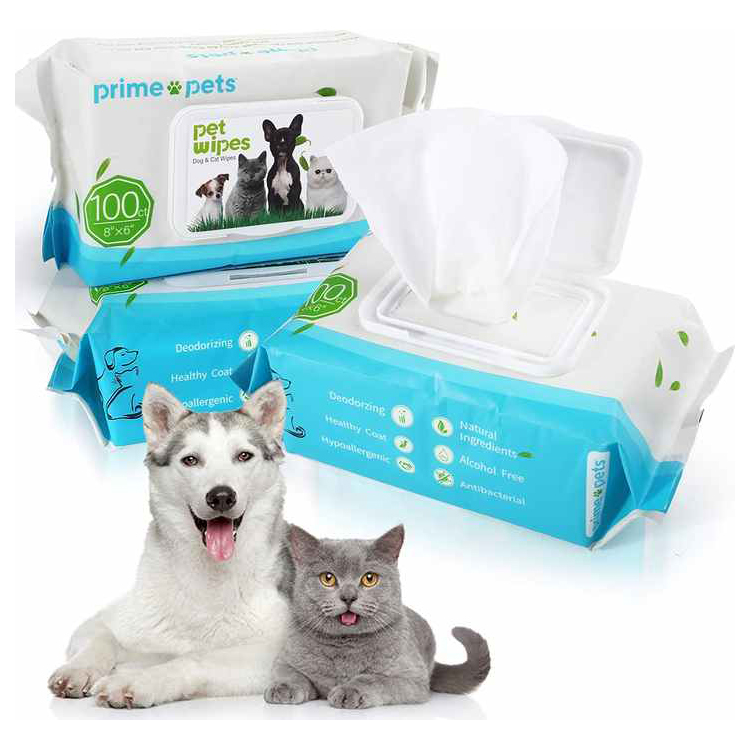
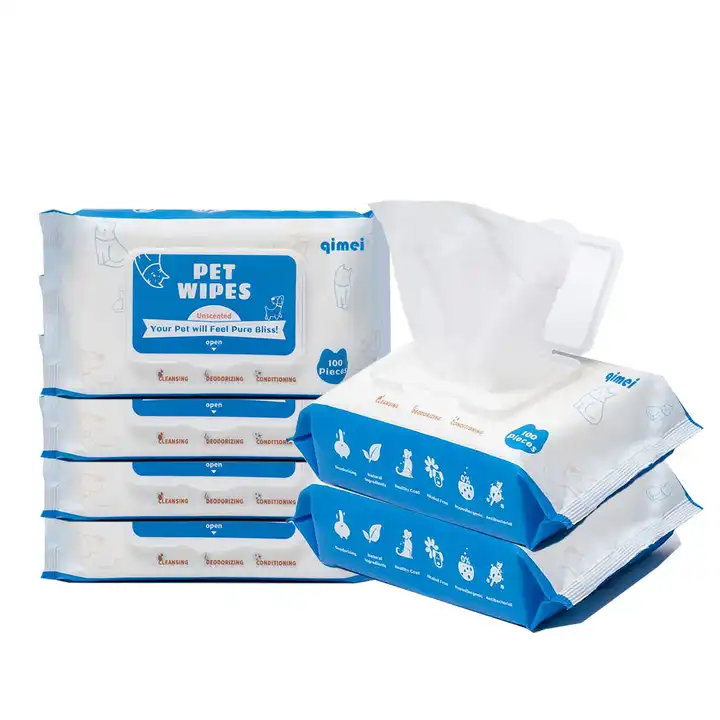
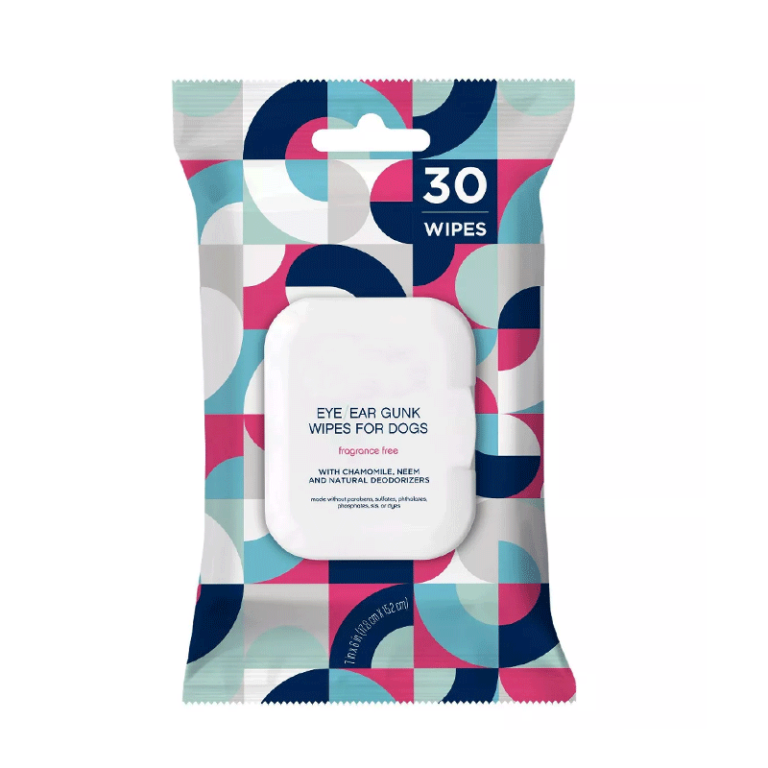
Pet grooming wipes are pre-moistened disposable wipes designed for external cleaning and grooming of pets.
Unlike ordinary household cleaning wipes, pet grooming wipes are typically developed with animal use in mind. Their formulations and substrates should therefore be selected according to factors such as:
Pet skin sensitivity
Coat type
Cleaning purpose
Frequency of use
Wipe strength
Moisture retention
Fragrance requirements
Intended cleaning area
They are commonly used to remove light dirt, dust, saliva, loose debris, outdoor residue, or unpleasant odors from a pet's coat and paws.
Because no rinsing is normally required, grooming wipes are particularly convenient for quick daily cleaning.
Modern pet owners increasingly treat grooming as part of routine pet care rather than an occasional task.
At the same time, frequent full bathing is not always convenient. Large dogs can be difficult to wash regularly, cats may dislike water, and puppies or elderly pets may require gentler grooming routines.
Pet grooming wipes provide a simple way to address these everyday situations.
One of the most common applications is cleaning a pet between full baths.
A dog returning from a walk, for example, may only have dirty paws and lower legs. A grooming wipe allows the owner to clean those areas without washing the entire animal.
Pet wipes are easy to carry in vehicles, travel bags, grooming kits, and outdoor pet supplies.
They can be useful during:
Road trips
Camping
Hiking
Hotel stays
Outdoor activities
Visits to parks
Pet shows
Veterinary appointments
Portable packs make quick cleaning easier when access to water is limited.
Pets do not always need complete cleaning.
Sometimes only a particular area requires attention, such as:
Paws
Legs
Coat surface
Belly area
Skin folds
Around the mouth
Rear area
Grooming wipes allow more targeted cleaning.
For households with multiple pets or for professional pet-care businesses, convenience is particularly important.
Pre-moistened wipes eliminate the need to prepare water, towels, shampoo, and bathing equipment for every minor grooming task.
Pet grooming wipes can be developed for a range of applications.
Understanding the intended use is important because different applications may require different materials, ingredients, wipe textures, and moisture levels.
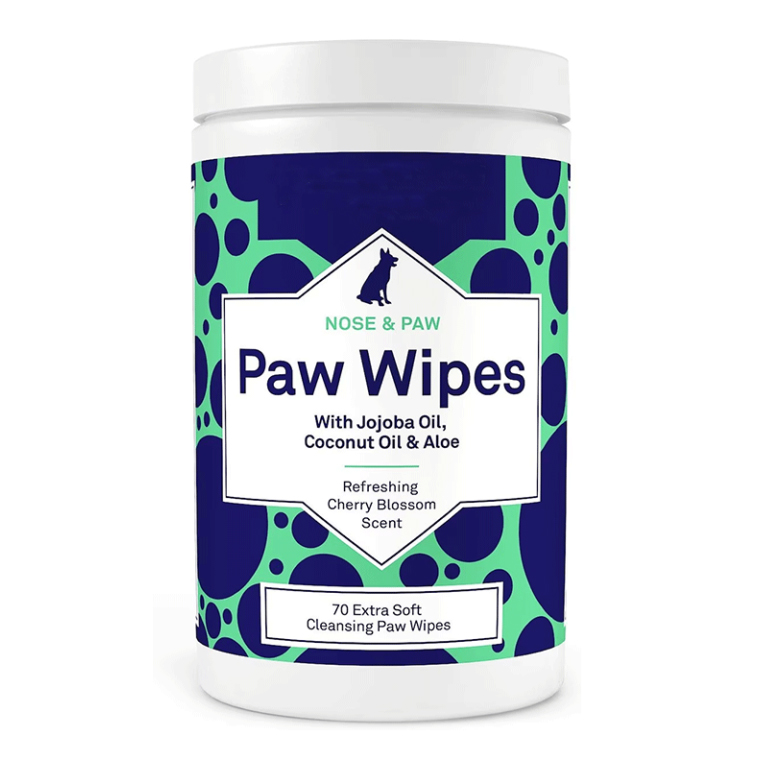
Paw cleaning is one of the largest everyday-use categories.
Dogs can carry dirt, dust, sand, grass, and outdoor residue into homes after walking outdoors.
Pet paw wipes are designed to quickly clean paw pads and surrounding fur before the pet enters indoor areas.
Useful characteristics may include:
Strong wipe substrate
Good moisture content
Suitable wipe thickness
Gentle cleaning formulation
Good dirt pickup
Convenient dispensing packaging
Large dogs may also require bigger or thicker wipes than small pets.
Odor-control grooming wipes are commonly used after outdoor activities or between baths.
Rather than simply masking odor, buyers should evaluate the formulation, fragrance level, and intended cleaning function.
Some pet owners prefer scented wipes, while others look for unscented pet grooming wipes, particularly for animals sensitive to fragrance.
For private-label brands, offering both scented and fragrance-free versions can help address different consumer preferences.
Some pets may have more delicate skin and require milder grooming products.
Sensitive-skin pet wipes are therefore often positioned around gentle formulations and carefully selected ingredients.
Product development may focus on:
Mild cleansing systems
Low-fragrance or fragrance-free formulas
Alcohol-free positioning where appropriate
Skin-friendly ingredients
Gentle nonwoven materials
Any specific safety or dermatological claim should be supported by appropriate formulation evaluation and testing.
The wipe substrate has a major influence on product quality.
Most disposable pet grooming wipes use some form of nonwoven fabric.
The exact material composition depends on the required softness, strength, absorbency, cost, and sustainability positioning.
Common substrate options may include:
Spunlace nonwoven
Viscose blends
Polyester blends
Plant-derived fiber blends
Other nonwoven materials
Spunlace is widely used for wet wipes because it can provide a useful balance between softness and strength.
For pet grooming applications, this matters because the wipe needs to remain intact while wiping fur, paws, or textured surfaces.
A wipe that feels too rough may be unsuitable for repeated grooming.
Soft substrates are particularly important for:
Facial areas
Puppies
Cats
Sensitive pets
Frequent-use products
Pet wipes should maintain sufficient strength when saturated.
Weak wipes can tear during use, especially when cleaning large dogs, paws, thick coats, or heavily soiled areas.
Some pet grooming wipes use embossed or textured surfaces to improve cleaning performance.
Texture may help the wipe collect dirt and debris more efficiently.
However, texture should still remain appropriate for contact with the intended pet area.
Wipe dimensions are often overlooked during product selection.
For pet applications, size can significantly influence user experience.
Small wipes may be adequate for:
Cats
Small dogs
Facial cleaning
Light paw cleaning
Larger wipes are generally more practical for:
Medium and large dogs
Full-body wiping
Outdoor cleaning
Grooming facilities
Professional pet-care use
For brands developing a product line, offering different wipe sizes can help target different pet sizes and applications.
A grooming wipe should contain enough liquid to clean effectively without becoming excessively wet.
If moisture content is too low, the wipe may dry out quickly and require several sheets per grooming session.
If moisture content is excessive, the product may feel inconvenient or leave too much liquid on the coat.
Manufacturers therefore need to balance:
Liquid loading
Substrate absorbency
Wipe thickness
Packaging seal performance
Expected shelf life
Dispensing conditions
Uniform liquid distribution throughout the package is also important.
The formulation should always be developed according to the intended product use.
Typical formulation considerations may include cleansing agents, moisturizing ingredients, conditioning ingredients, fragrance, preservatives, and water quality.
Commonly discussed ingredients in the pet-care market include:
Purified water
Aloe vera
Glycerin
Chamomile-related ingredients
Oat-derived ingredients
Plant-based extracts
However, including a particular ingredient does not automatically make a product appropriate for every pet.
Formulation safety, concentration, pet species, intended cleaning area, and product claims all need to be evaluated carefully.
Pet grooming wipes are not the same as ordinary cosmetic wipes for humans.
Animals may lick their paws or coat after cleaning, so formulation design requires careful consideration.
Brands should avoid making unsupported claims such as:
Hypoallergenic
Antibacterial
Antifungal
Medical-grade
Dermatologist approved
Completely non-toxic
Safe for ingestion
unless these claims are supported by relevant testing, documentation, and applicable regulatory requirements.
The wording used on the packaging should accurately reflect the product's intended function.
Whether sourcing pet wipes for retail, e-commerce, private labeling, grooming salons, or pet-care distribution, several factors should be evaluated.
Determine whether the wipe is primarily intended for:
General grooming
Paw cleaning
Coat cleaning
Odor control
Sensitive pets
Puppies
Cats
Large dogs
Travel
The intended application influences almost every later specification.
Larger pets generally require larger wipes.
For professional or multi-pet environments, a larger sheet can also reduce the number of wipes required per cleaning session.
Thickness affects:
Hand feel
Durability
Liquid capacity
Cleaning performance
Product positioning
Premium pet grooming wipes are often differentiated partly through substrate weight and texture.
Brands should evaluate:
Cleansing performance
Skin compatibility
Fragrance
Preservation system
Moisturizing properties
Intended pet species
Usage instructions
The formulation should match the intended marketing claims.
Wet wipe packaging needs to prevent moisture loss.
Common formats include:
Soft packs with resealable labels
Flip-top packs
Canisters
Individual sachets
Travel packs
The ideal packaging depends on price positioning, wipe count, portability, and distribution channel.
Pet wipes may be sold in small travel packs or larger household packs.
Different pack sizes can address different customer groups.
For example:
Small packs for travel
Medium packs for daily household use
Bulk packs for frequent grooming
Professional packs for salons and boarding facilities
Pet grooming wipes are also a popular category for private label and OEM pet-care brands.
Private-label programs allow buyers to develop products under their own branding while adjusting specifications according to market positioning.
Common customization areas may include:
Wipe material
Wipe dimensions
Fabric weight
Wipe texture
Moisture level
Formula
Fragrance
Wipes per pack
Packaging style
Label design
Outer carton configuration
Exact customization options will depend on the manufacturer's production capabilities.
Quality consistency is particularly important for wet wipe products.
Typical production control may involve monitoring areas such as:
The nonwoven fabric and formulation ingredients should meet defined purchasing specifications.
Formulation consistency is important to ensure each production batch performs similarly.
Each pack should contain an appropriate and consistent level of liquid.
Poor seals can lead to evaporation, leakage, or premature drying.
Because wet wipes contain moisture, appropriate formulation design, manufacturing hygiene, preservation systems, and testing are important.
Manufacturers may inspect:
Package appearance
Wipe count
Wipe dimensions
Seal integrity
Labeling
Liquid content
Carton condition
Testing requirements should ultimately be determined according to the formulation, target market, intended claims, and applicable regulations.
Sustainability is becoming increasingly important in the pet-care industry.
Brands may explore options such as:
Plant-derived wipe fibers
Reduced plastic packaging
Recyclable packaging components where technically feasible
Larger pack sizes that reduce packaging per wipe
Responsibly sourced materials
However, terms such as biodegradable, compostable, or plastic-free should only be used where the product actually meets the relevant definitions and testing requirements.
Buyers should request supporting documentation before making environmental claims.
Pet grooming wipes offer a convenient way to support everyday pet hygiene without requiring a complete bath every time an animal becomes dirty.
From quick paw cleaning after a walk to coat refreshing, travel grooming, puppy care, and professional pet-care applications, the category can address a wide range of practical needs.
For pet owners, the most important factors are appropriate use, wipe quality, suitable ingredients, softness, and convenience.
For brands, wholesalers, and distributors, product development should go further. Wipe material, dimensions, thickness, formulation, packaging, target application, quality control, and private-label customization all influence whether the final product can compete successfully in the pet-care market.
Rather than treating pet grooming wipes as a generic commodity, successful product development starts with a clear question: which grooming problem is the wipe designed to solve?
Once that use case is defined, the substrate, formula, packaging, and marketing message can all be built around the needs of the target customer.