


If you got any questions, please do not hesitate to send us a message. We reply within 8 hours !
Don't worry, we hate spam too!



MAKE A BETTER LIFE

Nov 26, 2026
The Common Mistakes When Using Leather Wipes usually involve choosing an incompatible product, skipping a hidden-area test, applying too much moisture, using excessive pressure, or leaving residue on the surface. These errors can cause discoloration, streaks, dryness, gloss changes, staining, or a slippery finish. I recommend checking the leather type first, reading the ingredient label, using a lightly damp wipe, and drying the surface with a clean microfiber cloth.
!
I see the same leather wipe mistakes repeated across car seats, sofas, shoes, bags, and office furniture. The first is treating all wipes as interchangeable, even though household, baby, disinfectant, makeup-remover, and general-purpose wipes may contain ingredients that are unsuitable for leather. The second is using a saturated wipe or applying repeated passes before the previous moisture has been removed.
Another frequent problem is cleaning by pressure instead of by controlled, overlapping passes. Leather surfaces can have a protective coating, pigment layer, printed grain, or delicate top finish that may become dull or uneven when scrubbed. A further mistake is using one cloth or wipe across several surfaces, which can transfer dust, dye, grease, disinfectant residue, or abrasive particles from one material to another.
Leather wipes combine a nonwoven substrate with a liquid formula designed to loosen surface soil, body oil, dust, and light marks. The wipe transfers a controlled amount of moisture and cleaning ingredients onto the surface while the cloth structure lifts loosened soil. The result depends on the leather finish, the formula’s pH and solvents, the wipe’s saturation level, and the pressure used during application.
Finished leather is generally more tolerant of carefully formulated leather-safe wipes because a coating separates much of the pigment from direct contact with the cleaning solution. Unfinished leather, aniline leather, suede, nubuck, and absorbent split leather require different treatment because moisture can penetrate quickly and create permanent darkening or tide marks. Faux leather may tolerate a mild wipe, but its polyurethane or vinyl coating can still become sticky, cloudy, or brittle when exposed to unsuitable chemicals.
For that reason, I do not select a wipe based only on the word “leather” printed on the package. I check whether the product is intended for the specific material, whether the ingredient information is available, and whether the manufacturer describes testing for the intended application. A leather-safe cleaning product should not be assumed to be suitable for every car interior, sofa, shoe, bag, or unfinished surface.
Before cleaning, I remove loose dust with a dry microfiber cloth or a soft brush. This reduces the chance that grit will be dragged across the surface during wiping. I also work in a shaded, well-ventilated area where the leather is close to room temperature rather than hot from sunlight, a heater, or a recently driven vehicle.
The most important practical rule is to avoid over-wetting. If liquid collects in perforations, seams, piping, or stitching, I stop applying product and use a dry microfiber cloth to absorb the excess. I never force moisture deeper into the material with pressure or heat.
The correct frequency depends on use, contamination, and the leather finish. For a frequently used car interior, light surface cleaning may be appropriate when visible soil or body oil appears, while a lightly used sofa or bag may need attention only when marks develop. I avoid using wipes on a fixed daily or weekly schedule if the surface is already clean because unnecessary moisture and conditioning ingredients can accumulate.
After cleaning, I assess whether a separate leather conditioner is needed. Some wipes include conditioning agents, while others are intended only to remove surface soil. Applying additional conditioner after every wipe can create buildup, so I follow the product instructions and use only a thin, even amount when the leather manufacturer allows it.
Yes, leather wipes can damage leather when the product is incompatible, the surface is unsuitable, or the application is too wet or abrasive. Damage may appear as color transfer, dark spots, loss of finish, uneven gloss, cracking, stickiness, or a greasy film. The risk is higher with unfinished leather, aniline leather, suede, nubuck, heavily worn coatings, and surfaces already affected by heat or moisture.
A wipe can also cause indirect damage by removing protective oils or altering the surface balance. Alcohol and strong solvents may dry or soften certain coatings, while heavy oils may attract dust and leave the leather slippery. Disinfectant wipes may be designed for hard, nonporous surfaces rather than leather, even when they appear convenient for car seats or furniture.
The safest approach is to stop treating the surface as soon as the appearance or feel changes unexpectedly. I do not attempt to correct a pale spot, dye transfer, or coating change by applying more cleaner. Additional product can spread the affected area and make professional restoration more difficult.
Leather wipes are designed for convenience and controlled, light surface cleaning. They are useful for removing fresh fingerprints, dust, light body oil, and small marks from suitable finished leather. A bottled leather cleaner applied with a separate cloth may provide more control when the surface is heavily soiled because I can measure the amount, dilute it if instructed, and adjust the cloth moisture.
| Cleaning option | Best suited for | Main control point | Common risk |
|---|---|---|---|
| Leather wipes | Light maintenance on compatible finished or coated leather | Wipe saturation and pressure | Excess residue or over-wetting |
| Leather cleaner with microfiber cloth | Larger areas or moderate soil | Product quantity and cloth moisture | Using too much cleaner |
| Specialist restoration product | Dye transfer, coating failure, severe staining, or unfinished leather | Technical process and material diagnosis | Improper treatment can worsen damage |
I choose wipes for small, routine cleaning tasks and a dedicated cleaner when I need more control over the formula and amount. Neither option replaces material identification or patch testing. The cleaning method should match the leather’s finish and the severity of the problem rather than the convenience of the package.
For finished leather car seats, dashboards with leather inserts, and coated furniture, I generally select a mild leather-specific wipe and use light pressure. For faux leather, I confirm that the product is approved for synthetic leather because vinyl and polyurethane coatings can react differently from animal hide. I avoid assuming that a wipe suitable for a coated car seat will also be safe for a soft handbag or shoe.
For unfinished leather, aniline leather, suede, and nubuck, I use a material-specific care method instead of a standard wet wipe unless the product instructions clearly permit it. These surfaces can absorb liquid, change color, or develop water marks. When the material type is uncertain, I consult the furniture, vehicle, footwear, or bag manufacturer before applying moisture.
| Material or surface | Preferred approach | What I avoid |
|---|---|---|
| Finished leather | Leather-specific wipe, light passes, microfiber drying | Household and disinfectant wipes |
| Faux leather | Product labeled for synthetic leather or vinyl-compatible care | Alcohol-heavy or solvent-based formulas |
| Aniline or unfinished leather | Specialist product or professional assessment | General wet wipes and aggressive rubbing |
| Suede or nubuck | Dry brushing and material-specific treatment | Wet leather wipes unless expressly approved |
| Perforated leather | Minimal moisture and immediate drying | Saturating perforations or seams |
| Dyed shoes and bags | Patch test on a concealed area first | Fragranced, oily, or abrasive wipes |
I inspect the ingredient information before purchasing or using a wipe. High-risk categories include alcohol at a strong concentration, bleach, ammonia, aggressive solvents, abrasive powders, heavy fragrance oils, and excessive conditioning oils. A product with no accessible ingredient or material-compatibility information receives more caution because I cannot evaluate its likely effect on a delicate finish.
I also look for practical instructions covering the intended leather type, testing method, drying process, and frequency of use. A pH-balanced leather cleaner may be preferable to a general household formulation, but pH alone does not guarantee compatibility. The wipe fabric, preservatives, surfactants, solvents, and conditioning ingredients all influence the final result.
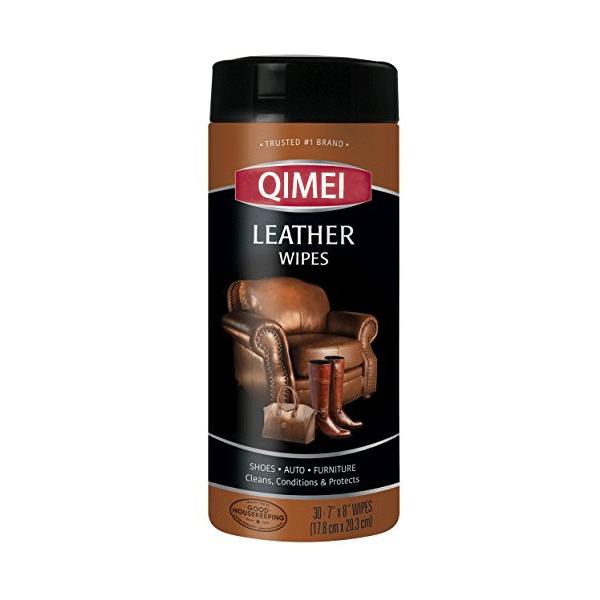
When evaluating a Leather Wipes Manufacturer, I look for evidence of defined product categories, formulation control, material testing, and traceable quality procedures. Qimei, a wet wipes manufacturer operating through several production facilities, reports more than 40 automated production lines, over 300 employees, exports to more than 100 countries and regions, and certifications including ISO 9001, ISO 13485, ISO 22716, BRC, GMPC, BSCI, EPA, and FDA-related credentials. These figures do not prove that every wipe is suitable for every leather type, so I still check the individual product specification and testing guidance.
If leather feels greasy after wiping, I first stop adding product. I use a clean, dry microfiber cloth and make short, gentle passes across the affected area, rotating to a fresh section of cloth as residue transfers. I avoid water saturation because adding more moisture can spread the film into seams and perforations.
For light streaks, I compare the treated area with an untreated section under indirect light. If the residue remains, I use only a compatible leather cleaner according to its instructions and test it in a hidden location first. I do not combine household detergents, disinfectants, alcohol, or solvents in an attempt to remove the original product.
Professional help is appropriate when the surface has changed color, developed a permanent gloss patch, become sticky, cracked, lost pigment, or shows dye transfer. I also stop cleaning when the leather is severely worn, peeling, deeply stained, or unidentified. Continued home treatment can enlarge the affected area and reduce the options available to a restoration specialist.
I store leather wipes in a sealed package at the temperature range stated by the manufacturer and keep them away from direct sunlight, heaters, and vehicle dashboards exposed to high heat. I close the package after each use so the remaining wipes do not dry out or become unevenly saturated. Before application, I check that the wipe is moist but not dripping.
I use separate microfiber cloths for leather, glass, plastic, and heavily soiled areas. This prevents cross-contamination from abrasive dust, tire dressing, disinfectant residue, and colorants. I also replace or wash cloths when they become visibly dirty instead of continuing to spread the same soil across a larger surface.
Properly cleaned leather should look even under normal indoor light, without new dark patches, cloudy streaks, or isolated glossy areas. It should feel clean and flexible rather than wet, tacky, oily, slippery, or unusually rough. After drying, the surface should behave normally when touched and should not transfer product to clothing or leave an artificial residue on the hand.
The safest response to the Common Mistakes When Using Leather Wipes is to match the product to the material, test it in a hidden location, apply limited moisture, use light pressure, and remove residue with a clean microfiber cloth. I avoid household, baby, disinfectant, and incompatible wipes because convenience does not establish leather compatibility. I also stop cleaning when the surface changes color, texture, gloss, or slip resistance.
For routine care, I clean small sections, rotate cloth surfaces, keep wipes away from heat, and allow the leather to dry naturally. For unfinished leather, severe stains, coating failure, or uncertain material types, I use a specialist product or seek professional assessment. These leather wipe best practices reduce the likelihood of discoloration, drying, residue buildup, and long-term surface damage.